
Impact of Insulation in Hot Regions
Energy Savings from Wall and Roof Insulation
The same office building (London office) is assumed to be located in a hot region, as shown below
An example demonstrating energy savings from wall and roof insulation as part of a building refurbishment project
In the following office building example, the 4th floor (the top floor, including the roof) has been considered for cooling load calculations.
Location: Basra / Iraq


Before refurbishing the building
Heat Gain Calculations (before)
Wall Construction (U=1.445 W/m² °C)

Report (before)
Graph (before)
.png)
Roof Construction (U=1.107 W/m² °C)
.png)
Energy (before)
Energy (before)
.png)
After refurbishing the building
Heat gain calculations (after)
Wall Construction (U=0.516 W/m² °C)

Roof Construction (U=0.536 W/m² °C)

Report (after)
Graph (after)
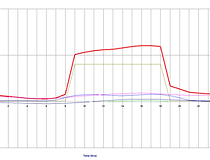.png)
Energy (after)
Energy (after)
.png)
SBEM, or Simplified Building Energy Model, is a UK government-approved calculation method used for assessing the energy performance and carbon emissions of non-domestic buildings (commercial properties like offices, shops, warehouses) to meet Building Regulations (Part L) and produce Energy Performance Certificates (EPCs). It evaluates factors like construction, lighting, and HVAC systems over a typical year to show compliance and identify energy-saving improvements, contrasting with SAP calculations for homes.
Before refurbishing the building
Complianc report
Energy report
EPC
After refurbishing the building
Complianc report
Energy report
EPC